

The cat strikes back
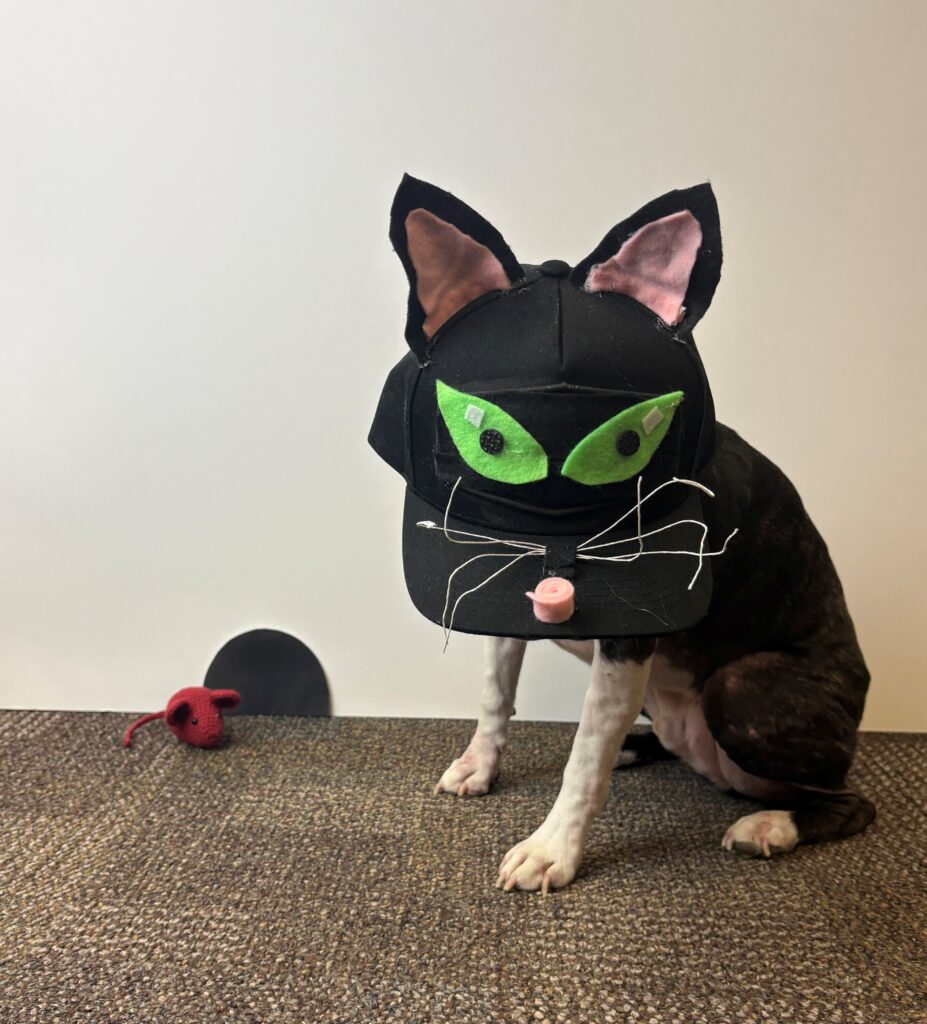
BMO may have a long history of featuring dogs in their branches and advertisements, but as the Cat-aloguer, I think it’s time for some representation of the domesticated carnivorous mammal, felis catus, or cat, within the Corporate Archives collection. Seeing as the resident Barkivist seems to be sleeping on the job, I’ve taken over this week’s article to show everyone that cats have an important place in the history of financial innovation! Bet you didn’t know what an important tool piggy banks have been in encouraging children to learn good financial habits.
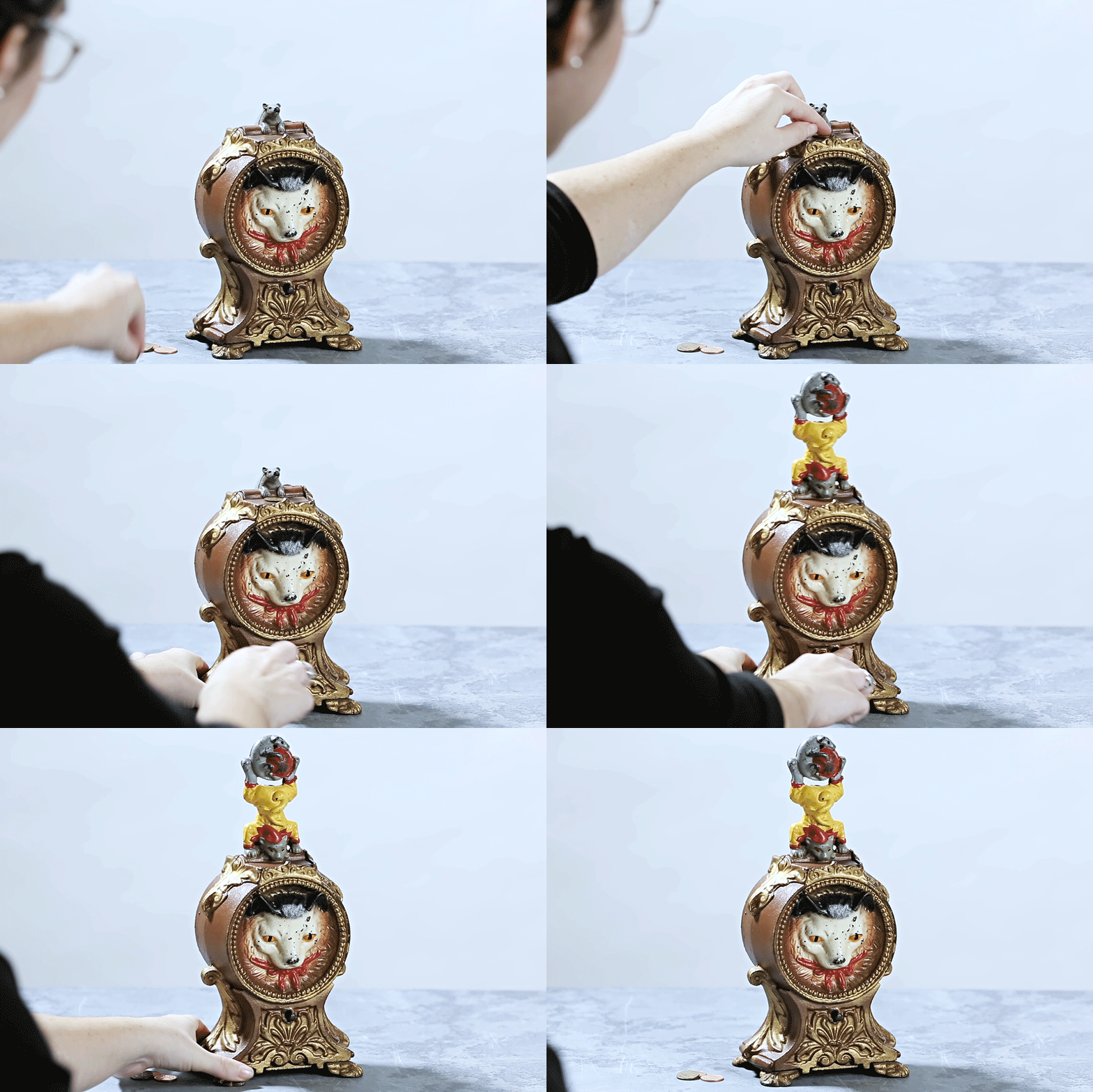
While purr-using the shelves for some much-needed cat-related artefacts, I stumbled upon this cast iron reproduction of a mechanical coin bank (“piggy bank”) originally produced by J. & E. Stevens in 1891. This fur-midable artefact features a cat’s face as the face of a mantel clock. On top of the clock is a mouse with a slot in front of it to insert a coin. When the lever on the base of the coin bank is pushed down, the mouse flips itself and the coin into the coin bank. The mouse is then replaced by an acrobatic cat in a circus costume doing a handstand and, between its feet, holding a mouse that is curled around a ball. This cat-inspired piggy bank was a paw-sitively fun way to encourage savings habits in young children so that they could make real financial progress.