

Exhibits
The Corporate Archives curates physical and digital exhibits from our collections to tell BMO’s story over the years. Our aim is to provide a better understanding of the defining moments in our history.
Class is in session
Making real financial progress doesn’t happen overnight. BMO has a well-established history of promoting financial literacy and encouraging children and young adults to learn the value of managing their money. The BMO Corporate Archives has a collection of vintage advertisements starting from the mid twentieth century aimed at helping customers at every stage of their lives, from elementary school to university and beyond.
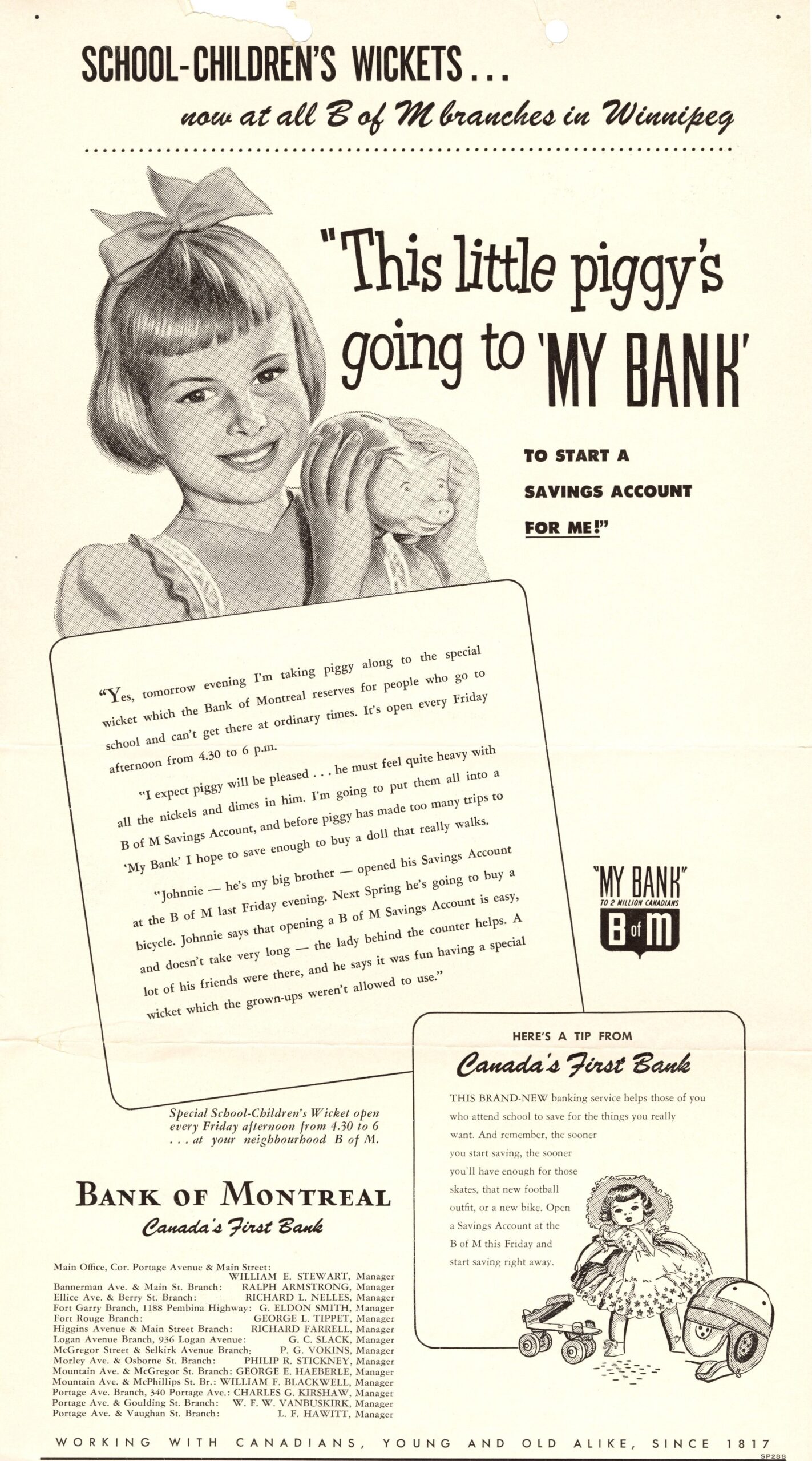
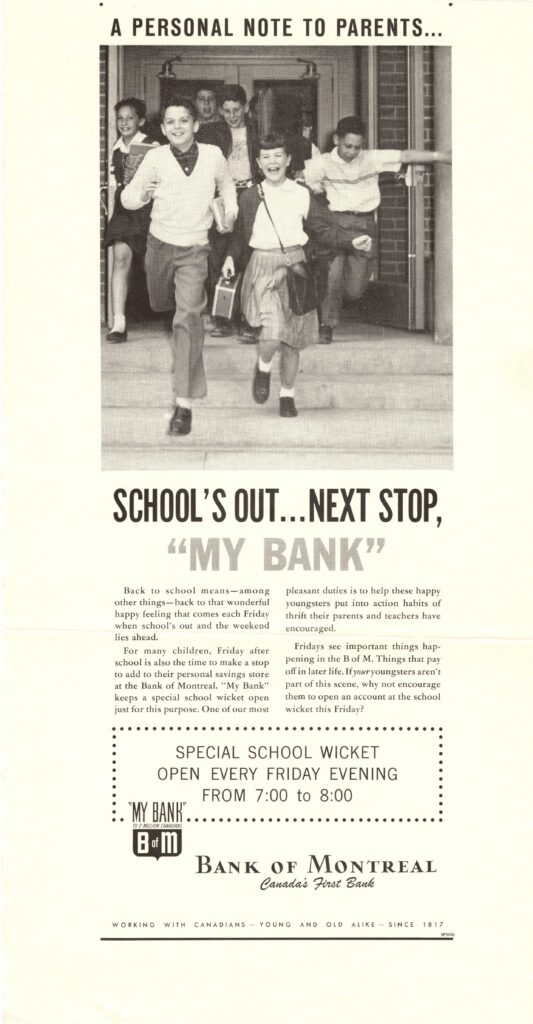
School-Children’s Wicket
In 1952, the Bank of Montral launched School-Children’s Wickets, the first of their kind in Canada. These specialized counter lines were designed to better accommodate children by being lower and smaller, allowing them the opportunity to conduct their own transactions. The wickets were meant to help instill healthy financial habits in children by encouraging them to start saving early and often.
These two advertisements from the 1950s advertise School-Children’s Wickets. They outline the wickets’ hours of operation, after school every Friday evening, with some open as late as 8 o’clock. The first features the fictional story of a young girl who is saving money to buy a doll that walks, while her brother is saving to buy a bike. Fictional stories such as these were intended to show children what they could achieve by saving their coins.
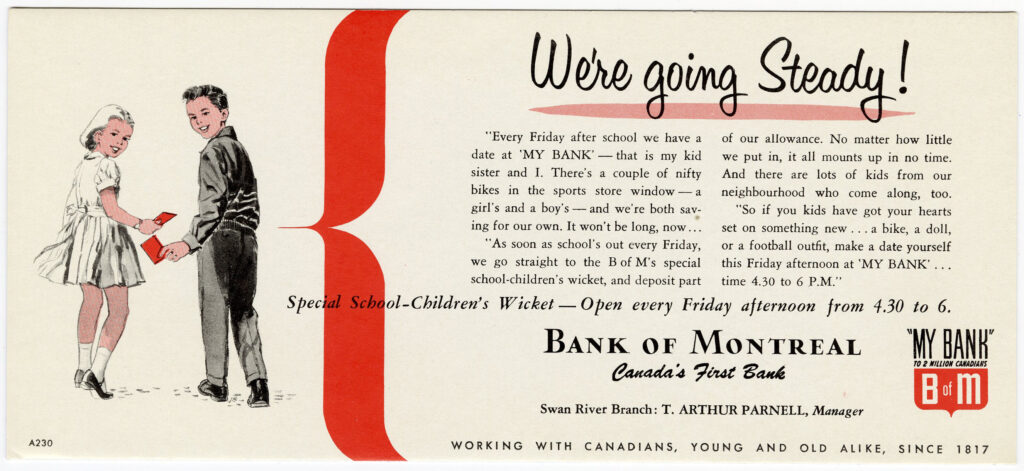
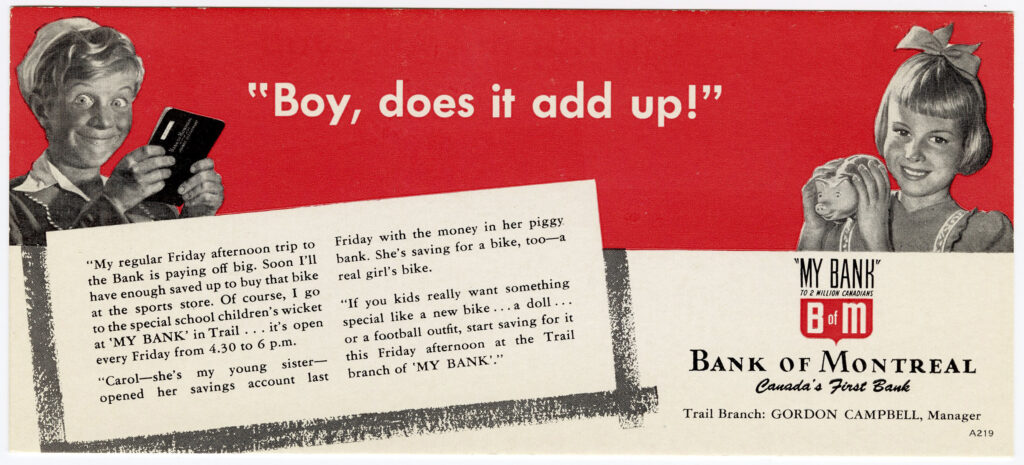
Ink blotters for school children
Before ball-point pens became commonplace, children in school used fountain pens, or “dip pens,” with pots of ink to write. These types of pens required the use of ink blotters, which were made of special paper to blot off excess ink, in order to help hasten the drying process. Companies would often print advertisements on ink blotters to share with their customers and they became like a type of business card.
These ink blotters, produced by BMO in the 1950s, are aimed at school children. They advertised the School-Children’s Wickets and encouraged children to deposit their allowance in savings accounts to save for special items, such as a bike, doll, or even sports gear.
Helping high school students manage their money
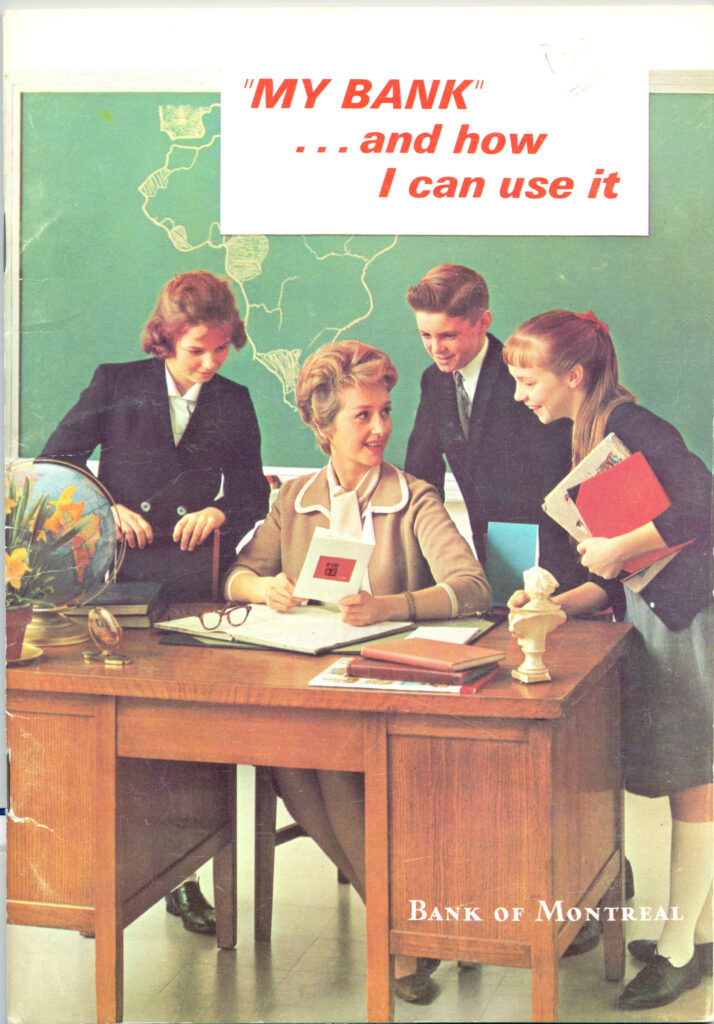
This booklet, produced by BMO in the mid-20th century, was aimed at helping high school students learn how to use a more varied range of banking services. The nearly 30-page booklet covers important topics, such as opening different types of bank accounts, writing a cheque, taking out a loan, and other services that a bank offers. It was intended as a general introduction and overview to high school students who were beginning to gain more financial independence and intended to help them establish a well-informed financial future.
Saving and studying
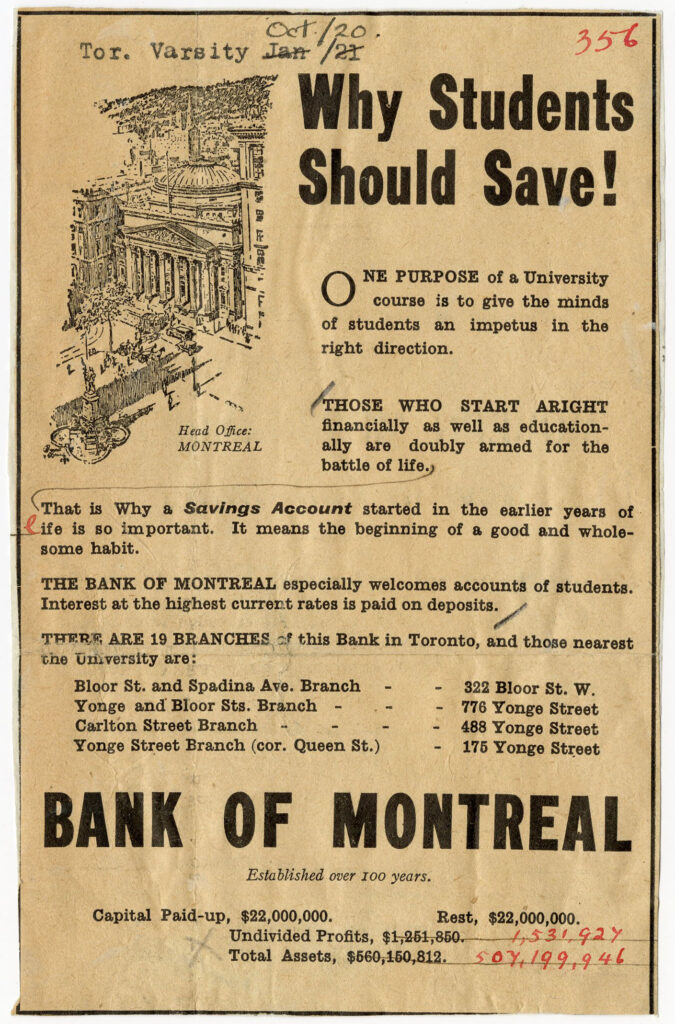
BMO would often publish advertisements in university and college newspapers and magazines in the early-20th century, notifying students that banking services were available. This advertisement was originally published in the University of Toronto’s student newspaper, The Varsity, in October 1920. It encouraged students to open a savings account during their studies in order to set themselves up for future success. The advertisement also informed students of the addresses of BMO’s four closest branches to the university, so that deposits could conveniently be made in between lectures or trips to the library.
Banking for every university major
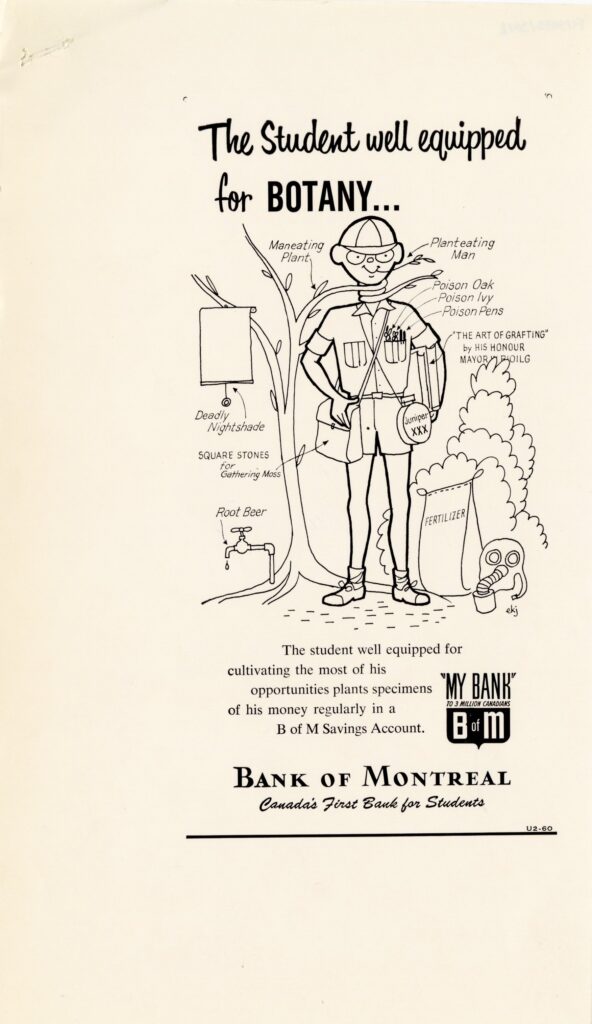
As advertising developed throughout the mid-20th century, BMO began to create whole advertising campaigns aimed at university students. Whimsical advertisements were even designed after specific degrees. Botany and chemistry are featured in these two advertisements, relating the importance of financial literacy to the specific skillsets required by these majors. These advertisements were a way for BMO to connect with university students of all disciplines who may not have established regular banking habits yet.
Wilbur and Gus Take On University
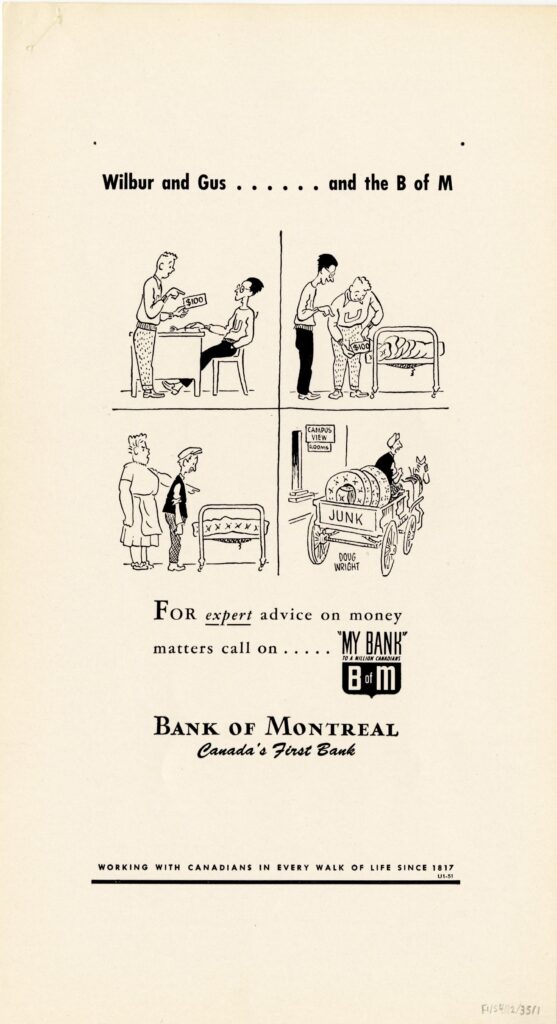
Another notable mid-century advertising campaign was the Wilbur and Gus campaign. These advertisements consisted of short comics featuring students Wilbur and Gus as they navigated various financial predicaments while at university. This example shows the pair storing money in their dorm mattress instead of opening a savings account at the Bank of Montreal. The mattress is then carried away on a junk cart. These advertisements, with their all-too relatable depictions of university life, encouraged students to seek advice at the Bank of Montreal so they could avoid making preventable financial mistakes.
Easing the transition from university life to adulthood
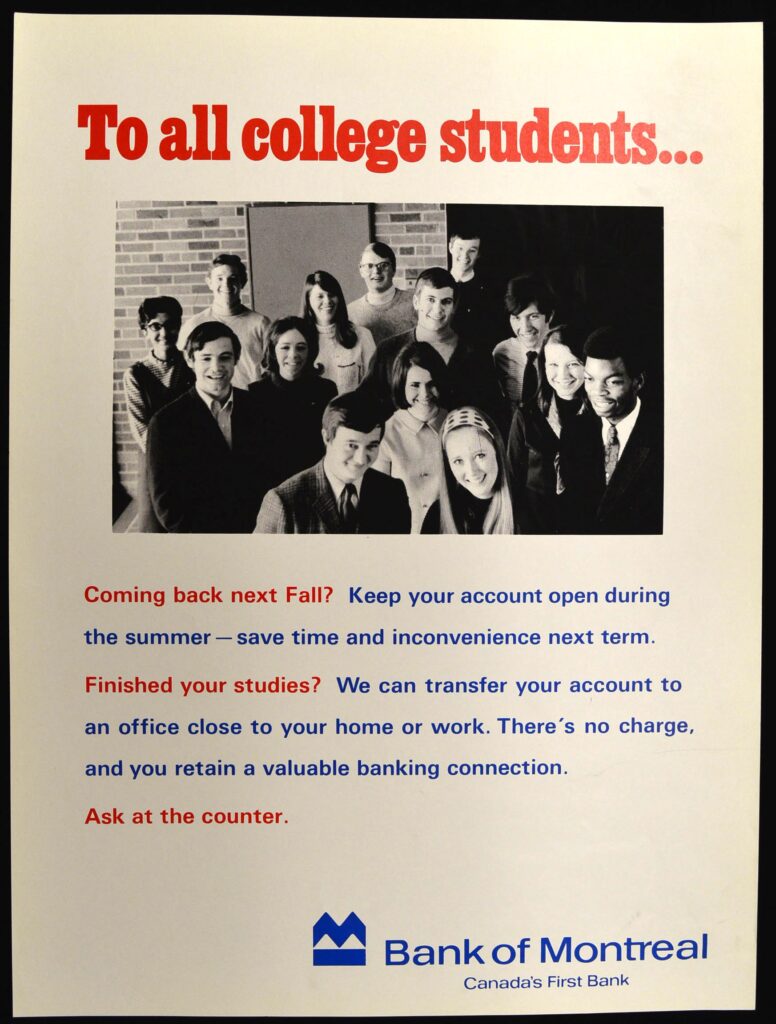
In the 1980s, BMO continued to advertise services that would be beneficial to university students, such as in this advertisement aimed at students nearing the completion of their studies. Once students graduated from university, the bank offered them the option to transfer their account to a different branch closer to home so they could continue banking with BMO and make real financial progress as they transitioned to the workforce.