

Celebrating the Japanese Canadian community at BMO
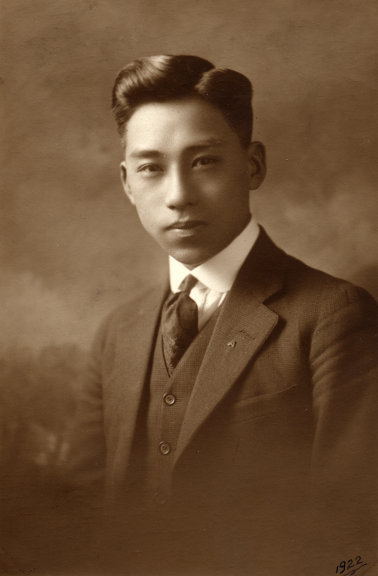
BMO’s Zero Barriers to Inclusion is an ongoing strategy focused on providing access and opportunities to and enabling growth of our colleagues, clients, and the communities we serve. Eizaburo (Eddie) Kitagawa is an early example of this commitment. Based on our records, he is the earliest known Japanese Canadian banker at the Bank of Montreal. In April 1922, he began working at the Cordova St. branch in East Vancouver, BC. Eddie’s prominence as a popular player on the Japanese Canadian Asahi baseball team helped him to connect easily with the many Japanese-speaking customers in the area.
Eddie was well known for his sense of humour among his colleagues in the branch. In his retirement notice published in the bank’s Staff Magazine in 1965, he relates the story of laboriously teaching another teller how to greet customers with a “How do you do?” in Japanese. The teller became quite popular, but none of his happy customers told him that he was, in fact, greeting them with a cheerful “I am a very handsome fellow!”
Eddie had a long career at BMO with an interruption during World War Two when the Canadian government enacted a policy to displace, detain, and dispossess Japanese Canadians along the coast of BC. As a result of this policy, he and his family were displaced to Toronto. In 1947, Eddie re-entered BMO as branch staff at Toronto main office and later moved on to working at the Toronto GENIE Centre a year before his retirement in 1965. The GENIE Centre was the first of its kind in Canada and allowed for data processing using magnetic ink character recognition.